Working together to boost tourism
Tourism is one of Ireland's most important industries. In 2024, international visitors spent €6.2 billion in the country. Domestic tourism added a further €3.6 billion. Combined, that is close to €10 billion flowing into local economies. Local authorities play a key role creating positive experiences for visitors, and ensuring that tourism delivers positive benefits for communities.
Capturing tourism's potential – and spreading its benefits across towns and communities throughout the country – requires careful planning and sustained collaboration. Local authorities are central to that process. They have the local knowledge, the community relationships and the day-to-day presence to bring the right people together around shared goals. The results can be seen in transformed public spaces, new visitor attractions and festivals that draw visitors from across Ireland and beyond.
How local authorities support tourism
Local authorities do not deliver tourism on their own. Their role is to create the conditions that allow others to succeed – supporting networks, facilitating partnerships and providing practical support that makes collaboration possible.
"Our job is about enablement," says Aidan McCormack, Tourism Officer with Sligo County Council. "We work with Fáilte Ireland, with businesses, with communities and with neighbouring counties to create the conditions for tourism to succeed."
In Sligo this includes working with neighbouring counties to position the entire northwest of the country as a destination in its own right, drawing visitors who arrive through Ireland West Airport in Knock.
How are local tourism strategies developed?
In every county, the city or county council works with Fáilte Ireland, local businesses, community groups and other agencies to develop and deliver a tourism strategy. The strategy is the result of significant engagement with the people and organisations who know the area best.
"Stakeholder engagement is a really important part of what we do," says Billy Byrne, Tourism Development Officer with Wexford County Council. "The strategy has to be driven by the people who know the area best.”
This approach means that tourism development reflects genuine local priorities and builds the relationships between agencies, businesses and communities that are needed to turn plans into reality.
Collaboration in action: projects that make a difference
When the partnerships work, the results are tangible. The National Surf Centre at Strandhill in Sligo was developed through a partnership between Sligo County Council, Fáilte Ireland and the Department of Rural and Community Development and the Gaeltacht. It provides facilities for surf schools and visitors and is designed to attract more than 40,000 visitors a year by 2028.
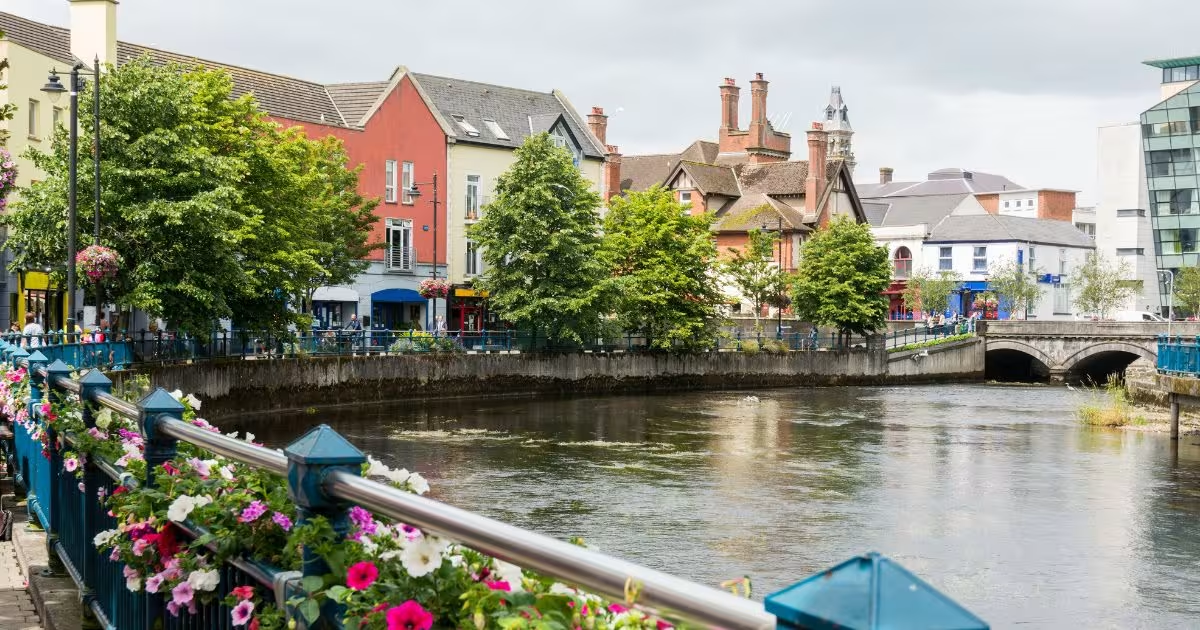
Sligo town is also being transformed through the development of Queen Maeve Square, a new civic and cultural space on the banks of the Garavogue river, built where a car park once stood.
Supporting local attractions and festivals
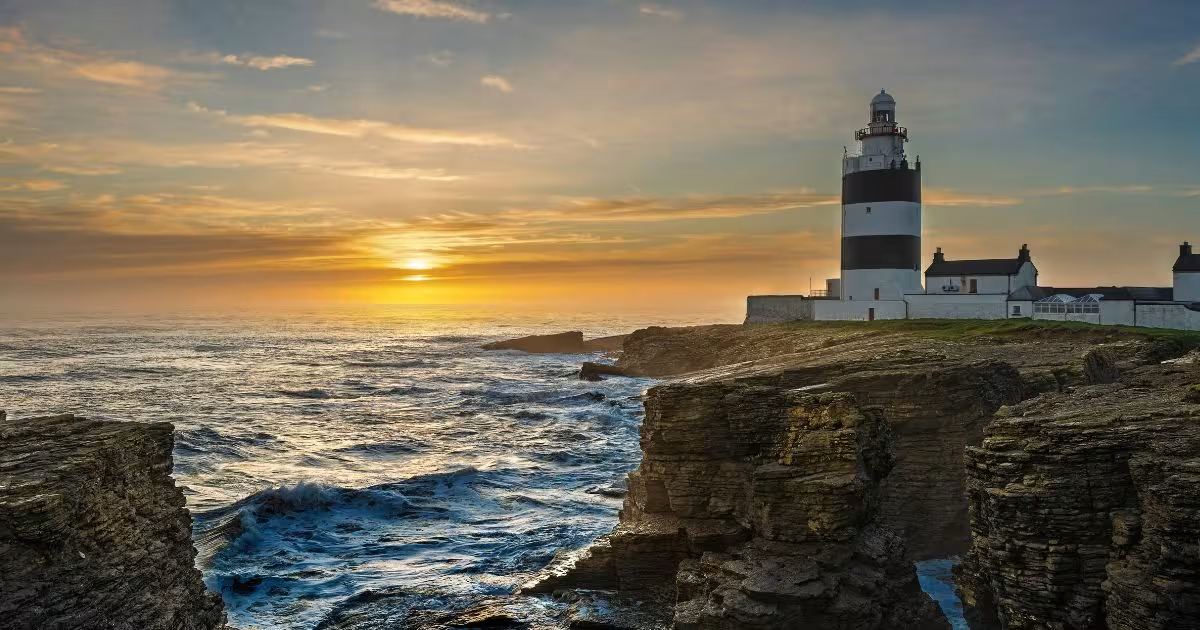
Local authorities also support existing attractions and events that bring visitors to their areas. Wexford's Hook Lighthouse for example, one of the oldest lighthouses in the world, draws visitors throughout the year. Wexford Festival Opera, now in its 75th year, brings visitors to the town each autumn, and the Spiegeltent festival runs alongside it, drawing audiences well beyond opera fans.
These events and attractions generate real activity in local communities. "Every visitor that comes to Wexford enhances the local economy," says Billy Byrne. The county has traditionally drawn strongly from the domestic market, but the local authority sees real potential to grow visitor numbers from outside Ireland.
Looking ahead, Wexford is preparing for a significant role in the Millennium of the Normans initiative in 2027. The Normans first arrived in Ireland through Wexford, and the county is already investing in that story. The Norman Visitor Centre in New Ross is among the projects in the county's tourism development plan, part of a wider urban regeneration investment.
Collaboration also connects tourism to wider decisions about how places are managed. "Tourism touches everything. including biodiversity," says Aidan McCormack. "Clean beaches and healthy waters are one of our biggest draws. Environmental policy and tourism go hand in hand."
Why local authorities are central to tourism development
Successful tourism development depends on collaboration between many different organisations and interests including national agencies, local businesses and community groups. Local authorities bring all these groups together, aligning efforts around shared goals and ensuring tourism delivers lasting, positive benefits for communities across the country.