Biodiversity in your neighbourhood
Local biodiversity is often thought of as something distant, like wild coastlines, remote forests or protected landscapes far from urban life. But biodiversity is also part of everyday life in towns and cities. It exists in housing estates, parks, rivers, roadside verges and coastal areas, wherever plants, animals and people share space together. As Ireland’s urban areas continue to grow, local authorities are playing an increasingly important role in protecting and improving these environments for both wildlife and local communities.
Across urban areas, local authorities consider how public spaces are planned and managed so that nature has room to thrive. This can include planting native trees, protecting habitats and designing new spaces with biodiversity in mind. The changes are often gradual, but they help make towns and cities healthier, greener and more resilient places to live.
Supporting biodiversity in housing estates
Housing estates are an important part of the urban environment and can provide real opportunities to support wildlife when they are thoughtfully designed and managed. In Fingal, a new initiative is exploring how existing estates can be adapted to improve biodiversity while also creating attractive spaces for residents.
Hans Visser, Biodiversity Officer with Fingal County Council, explains how the county's new housing estate "biodiversity makeover" programme works. Resident associations were invited to put their estates forward for a redesign focused on supporting wildlife in their neighbourhoods. The initiative was well received, and five estates were shortlisted to work with landscape designers and ecologists in the initial phase.
The measures explored include meadow planting, native tree planting, ponds and wetlands, and features such as bird and bat boxes.
“Local residents are really involved from Day One on this,” Visser explains. “Collectively, residents decide what they want, and the design grows out of those conversations.”
Before work begins, ecologists carry out surveys to understand what wildlife is already present. The estates will then be monitored over five years to see which measures work best. According to Visser, this long term approach is key. “We want to understand what actually works in an urban housing estate, and what is most cost effective over time,” he says. “That way we can focus resources on measures that deliver real benefits for wildlife and for communities.”
Urban biodiversity is interconnected
Urban biodiversity is not just about protecting individual species. It is also about understanding how ecosystems work together and how changes in the population of one species can affect another.
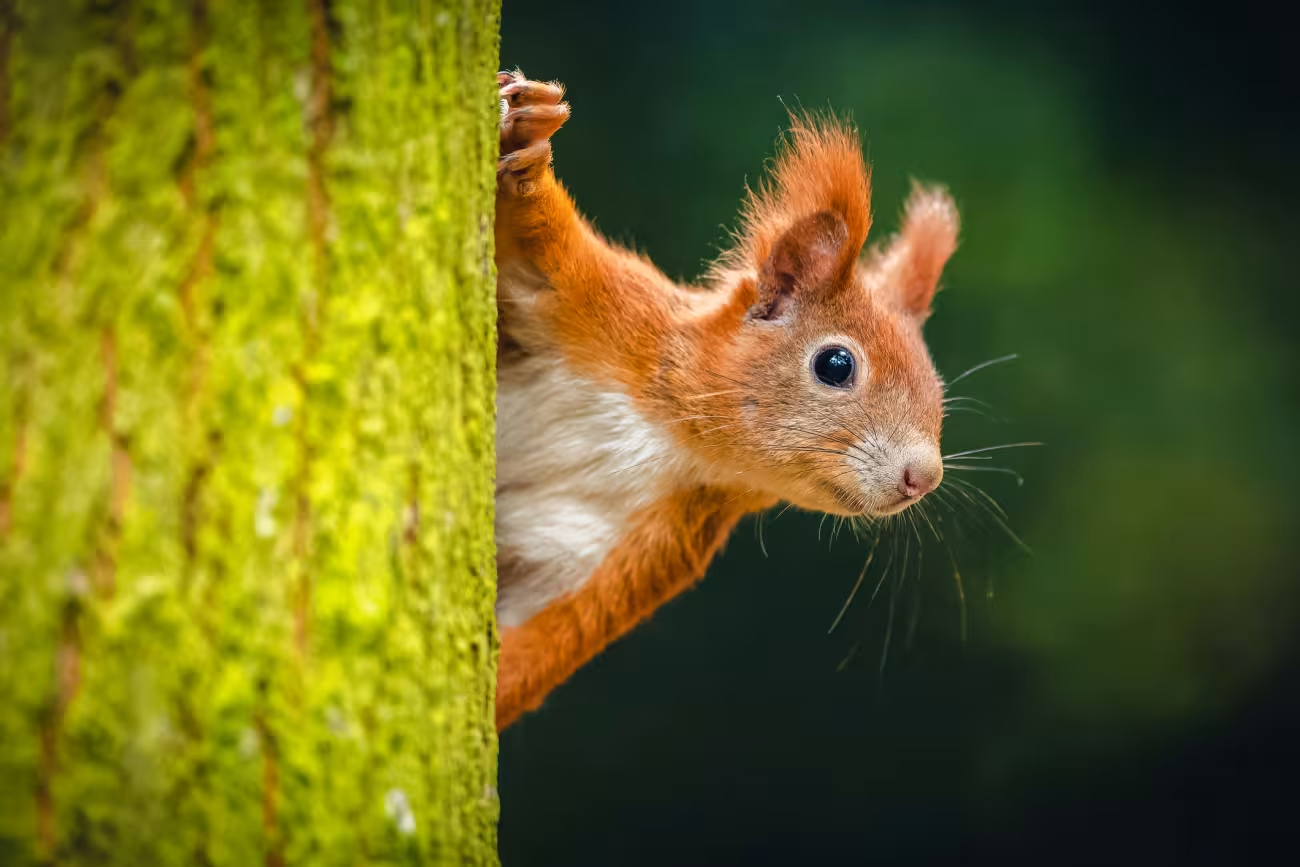
David McNicholas, Biodiversity Officer with Galway City Council, points to the red squirrels that live in the city's woodland areas as a good example. For decades these animals have been under pressure from invasive grey squirrels, who compete with them for food and habitat. But in recent times, the return of the pine marten has given them a boost. Pine martens hunt grey squirrels, reducing their numbers. This gives the red squirrel populations a better chance to recover.
“It shows how connected ecosystems are,” McNicholas says. “Sometimes protecting one native species can have wider positive effects across the environment.”
Biodiversity and the planning process
The planning system also plays an important role in protecting biodiversity. Before older buildings are renovated or demolished, local authority planning departments may require surveys to check for protected species. If bats are found, planning permission can include conditions to protect them. Work may need to take place at certain times of year to avoid breeding seasons for example, and alternative roosts may have to be provided.
The planning process also looks at the wider habitat, making sure it stays protected. Bats rely on nighttime darkness and hedgerow networks to move safely between feeding and roosting areas. Introducing artificial lighting or removing hedgerows can disrupt these movements, harming the bats, so planning departments consider biodiversity when assessing developments.
“Even a simple measure such as directional lighting that points downwards can reduce light pollution and make a real difference,” McNicholas says.
Restoring rivers and waterways
Along the River Liffey in Dublin, recent projects show how local authorities can work together to help restore damaged river ecosystems. Fingal County Council, Dublin City Council and South Dublin County Council have worked on initiatives to improve fish passage along parts of the river where old weirs and barriers had restricted the movement of migratory fish such as salmon and sea trout.
Other measures, including reshaping riverbanks and planting trees along waterways, help rivers flow more naturally while also creating shade and shelter for wildlife.
“This is vital work to help make rivers easier to navigate for migratory fish,” Visser says.
Creating urban areas where nature can flourish
Across Ireland, biodiversity officers, planners and community teams are increasingly working together to ensure nature is considered in how urban areas are managed. From housing estates and street trees to buildings, rivers and coastlines, these everyday places can support a wide range of species when they are cared for thoughtfully.