Ready for the storm: How local authorities plan for weather emergencies
Long before a storm arrives, local authorities are getting ready. Find out how teams plan ahead, respond when severe weather hits and support communities in the aftermath.
On the day the red warning began for Storm Éowyn in January 2025, three of Donegal County Council's most senior officials worked in different locations. Garry Martin worked from one council office, the Chief Executive from headquarters, and another director of service from a third location, ensuring continuity of leadership across the county throughout the emergency.
Martin is Director of Economic Development, Information Systems and Emergency Services at Donegal County Council. He has been the director responsible for emergency services for 16 years, and he chairs the local authority's severe weather team. He emphasises the importance of careful planning and a calm, measured approach in leading the local authority’s response to emergencies. "We never get too flustered," he says. "You plan for it, prepare for it, have all of your ducks lined up and respond as best you can."
Two local authority staff provide an insight into the operational and communications planning behind a major emergency response, from the first warning through to response and recovery.
When the storm is coming
Met Éireann, the national weather service, issues yellow, orange and red warnings, meaning a major storm rarely arrives without notice. Martin says local authorities are informed about major storms several days ahead about 95 times out of 100.
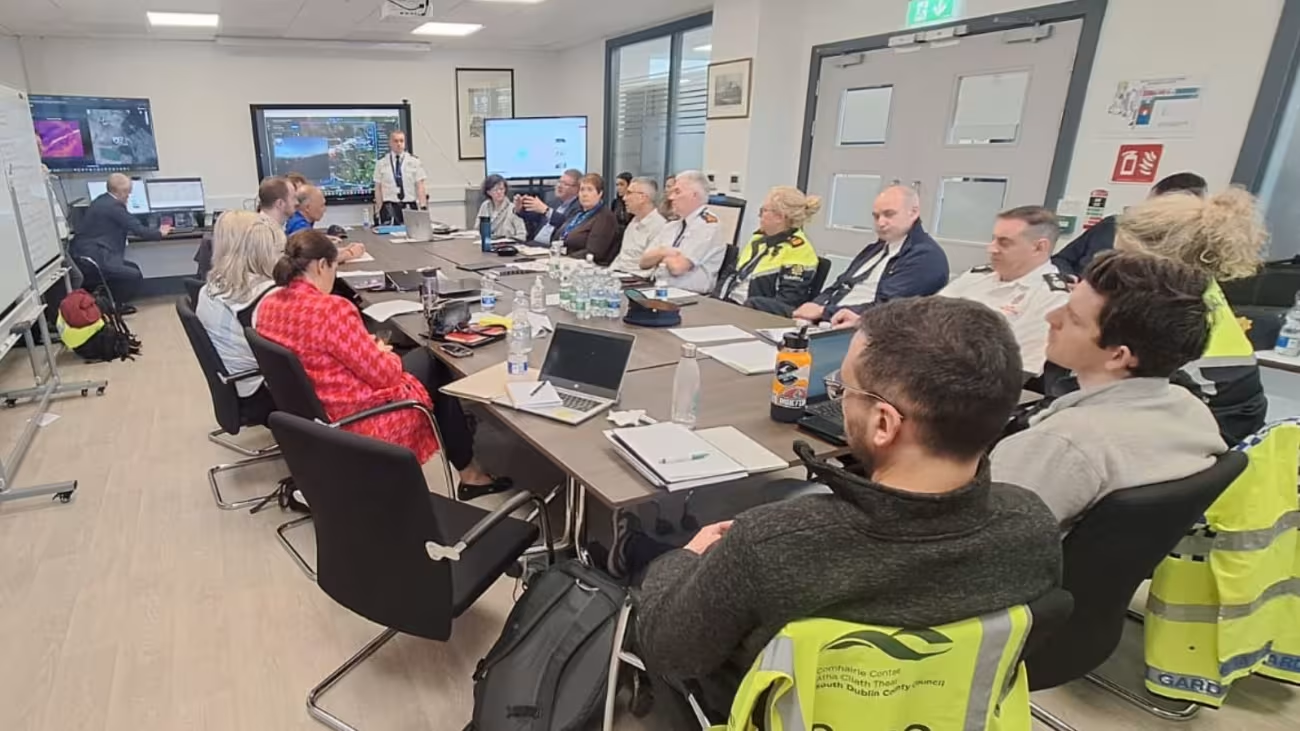
Ahead of a major storm, the National Directorate for Fire and Emergency Management calls a national meeting. Local authorities, Met Éireann, the Defence Forces and the main utility companies all attend, and they meet at least once a day to plan the emergency response at national and local level. Each meeting gives a clearer picture of where the storm will hit hardest and the measures that need to be put in place to support the response to it.
Each local authority makes its own assessment, because a storm can hit one area harder than another. If the forecast points to coastal flooding, local authorities on the seaboard can move sandbags and pumps to the places most prone to flooding before the water arrives. They will close car parks and warn people in the areas most at risk. Fire, roads and housing crews go on standby, ready to move.
The severe weather assessment team
That local assessment is the work of the severe weather assessment team. There is one in every local authority, bringing together representatives from relevant services across the local authority: roads, fire services, Civil Defence, housing, community services and communications.
In Donegal, Martin calls the team together as soon as the local authority has a clear picture of what is coming. If he is away, the Director of Roads and Transportation takes the chair. The team then focuses on preparing for the approaching weather and making sure the resources and people needed for the response are ready.
Martin says storms are becoming more frequent, less predictable and more intense, and the planning has grown with them. An assistant chief fire officer manages Donegal's emergency planning. Ten years ago, Martin says, the job took about 10% of that officer's time. Now it takes about 80%, reflecting the increased level of preparation needed before emergencies happen.
Teams work together
A local authority does not deal with a storm alone. Under the national rules, the local authority leads the response to severe weather at local level, and in Donegal it works with the Gardaí, the HSE and the ESB. Senior staff from the local authorities, the Gardaí and the HSE meet in regional groups.
Martin says the links between officers on the ground are critical, so he goes to major incidents in person. Those links have to be in place before they are needed. There is no point, he says, in figuring out how to work with a Garda chief superintendent or a HSE manager "when the meteor strikes".
Local authorities also help each other. According to a national review of Storm Éowyn undertaken by the Department of Housing, Local Government and Heritage, all local authorities shared available resources between them, and a central national database was established to support their work.
During a major storm, that response can stretch across almost every part of the local authority. Roads and fire crews respond to blocked routes and emergencies, while Civil Defence, housing, community and communications staff work to support affected communities and keep people informed.
Looking after people
The work goes on after the wind drops. In Donegal power cuts were the biggest problem in the aftermath of Storm Éowyn, Martin says. Indeed his own house had no power for six days.
Volunteers with Civil Defence, the national organisation that supports frontline emergency services, go out to vulnerable people. They bring medicines and food, and take people somewhere warm if they need it. The Gardaí and the HSE also co-ordinate with local authorities to make sure people get the help they need.
Where the power stays off for a long time, the local authority opens community support centres and supplies them with generators. People can charge their phones there and get a hot meal.
Local authorities are also now the local contact point for national support schemes. If homes are flooded, the local authority can connect residents with the Department of Social Protection, which provides support for immediate needs such as clothing and bedding through the Emergency Response Payment. Businesses affected by flooding can also be directed to the Emergency Humanitarian Flooding Scheme, administered by the Irish Red Cross.
The local authority’s work can continue for several weeks after the immediate emergency has passed, as it supports those affected, coordinates with the relevant agencies and helps verify the impact of the storm.
The local authority also reviews its own work. Soon after a storm, each service reports back to the weather team, and an assistant chief fire officer writes a report. After Storm Éowyn, that report led to a change: every fire engine in Donegal now carries a chainsaw, enabling crews to deal with fallen trees and keep moving during emergencies.
Keeping the public informed
Through all of this, the local authority has to keep people informed. In Donegal, the communications unit forms part of the severe weather assessment team, so public information is considered from the outset.
Across the country, local authorities use the same main channels. They publish updates on their websites, share information through social media and local media, and operate phone lines, including emergency numbers for out-of-hours support.
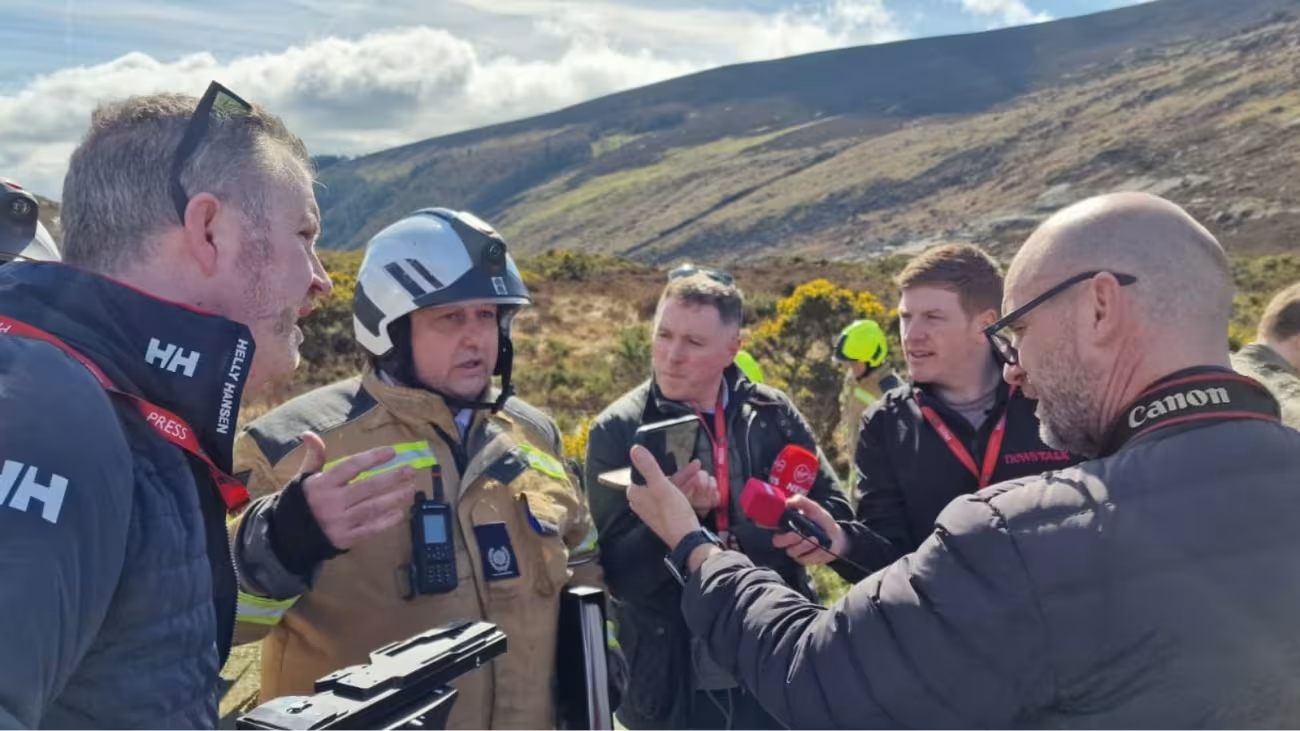
Gerry McDermott is Head of Communications at Fingal County Council. He also chairs the communications group for major emergency planning in the east region, which brings together communications staff from six local authorities, the Gardaí, the HSE and fire services to plan how they will keep the public informed during an emergency. He explains how the group plans ahead. It prepares guidance on public information and takes part in training exercises. For example, an exercise run from Laragh in County Wicklow in March 2025 tested the response to a mountain wildfire. McDermott says it helped communications staff plan how to work with the media and how to monitor social media to help ensure accurate information is being shared.
Real storms also bring valuable lessons, McDermott says. Storm Éowyn showed that local authorities still need ways to reach people when power and mobile networks go down. Local radio became an important source of information in badly affected areas, while postal workers helped reach vulnerable people in remote communities. Those lessons are now helping to shape plans for future emergencies.
Summer risks on the mountains
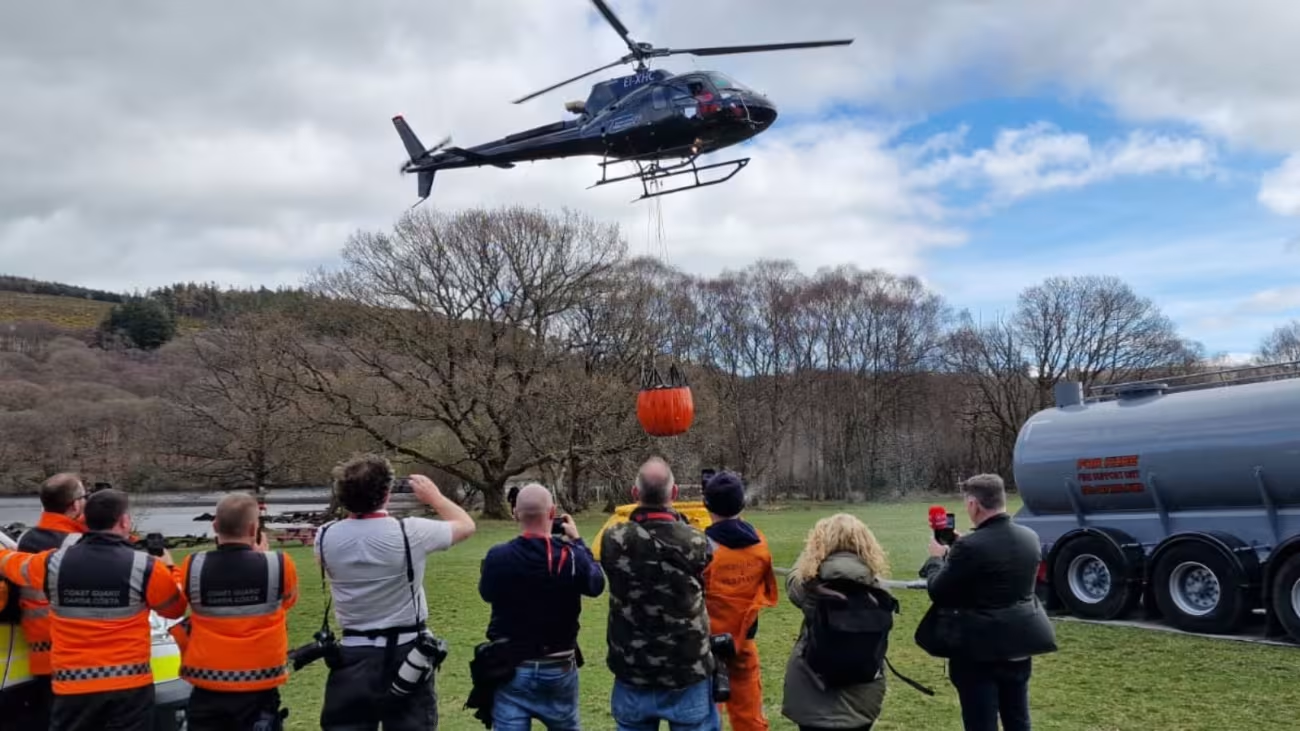
The same people deal with different weather-related emergencies throughout the year, including in summer. In hot, dry weather, wildfires can start on high ground. Dead grass builds up on the mountains year after year, creating what is known as a fire load. When this catches fire the consequences can be serious. Some mountain areas are too dangerous even for fire crews. If the wind turns, Martin says, "you won't outrun the fire".
In these situations, the local authority calls in helicopters, from the Air Corps or a private company, and uses drones to locate the fire without putting crews at risk.
Community response
Storm Éowyn also showed how local communities can strengthen the planned response. Across affected areas, local authorities and Civil Defence supported vulnerable people and helped set up community support centres. In some areas, local groups with access to electricity or generators were able to open their doors quickly, with volunteers and businesses helping to provide hot food and other support. Local authorities could then work with and assist these community-led efforts.
“You see people at their best during times of crisis,” Martin says.
Adapting to new challenges
As severe weather becomes more frequent and less predictable, local authorities continue to adapt so they are ready for whatever comes next. The experience of setting up community support centres during Storm Éowyn helped shape the approach to supporting communities during long outages, while Donegal County Council's own review led to changes in the equipment carried by fire crews. Martin says local authorities learn from every incident. That kind of planning does not stop when a storm ends.